
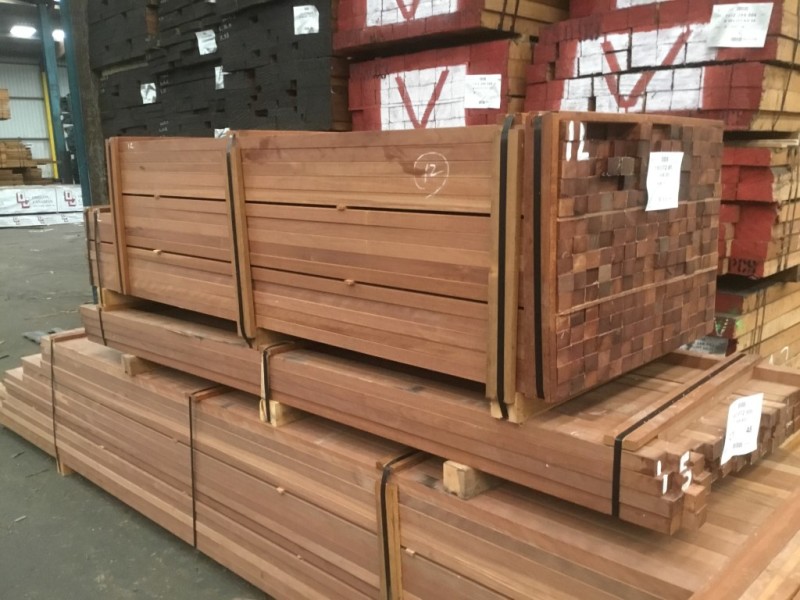
Dark red meranti
Meranti is one of the most widely used hardwoods in European joinery, but not every batch performs the same. Light, low-density boards look similar at first glance, yet they are far less durable and can start to decay within a few years in exterior frames. Choosing dark red meranti that is selected on density avoids that risk and gives you a stable hardwood. Vandecasteele Houtimport keeps certified dark red meranti in stock for joinery manufacturers, merchants and contractors across Europe.
Discover our dark red meranti
What is dark red meranti?
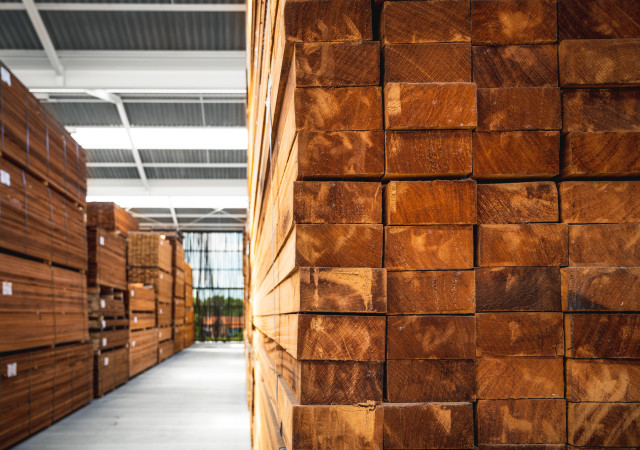
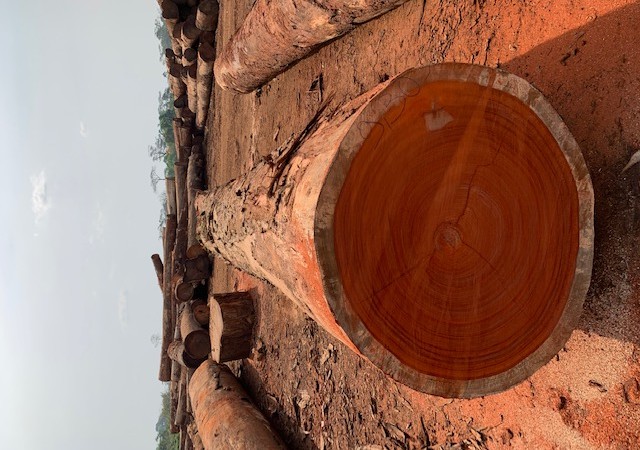
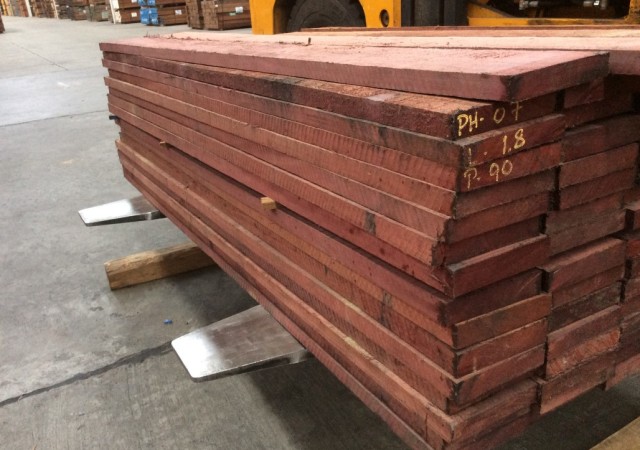
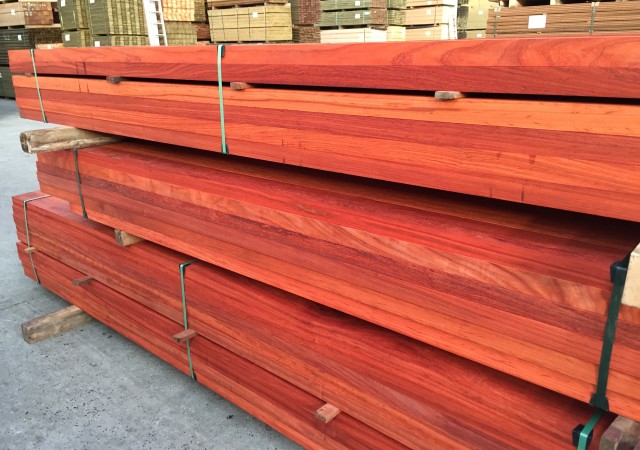
Dark red meranti is the trade name for a group of Shorea species from Southeast Asia, mainly Malaysia and Indonesia. The heartwood ranges from medium to dark reddish brown and is clearly distinguishable from the paler sapwood. Its interlocked grain gives a subtle stripe figure on quarter-sawn surfaces, which is appreciated in visible joinery. The trade separates it from light red meranti, which is lighter in colour and density and less suitable for exterior use.

Technical properties
The technical properties of dark red meranti vary with the species and especially with its density. The figures below give a reliable indication for well-selected material.
The density at 12 to 15 per cent moisture content usually lies between 540 and 760 kg/m³.
The natural durability is rated between class 2 and 4 under EN 350.
Movement in service is small, so frames and doors keep their shape well.
The wood machines and finishes well, although the interlocked grain calls for sharp tools.
Because durability rises with density, it pays to buy from a supplier that selects on weight. That is the difference between a window that lasts for decades and one that needs replacing early.
Where can you use dark red meranti?
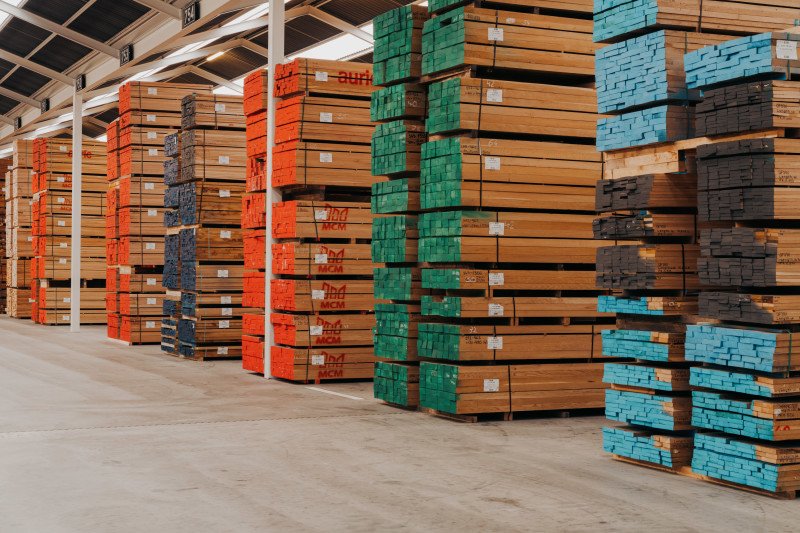
The combination of stability, workability and moderate durability makes this species a classic choice for exterior joinery. Window frames, external doors, conservatories and door frames account for most of its use in Europe. Indoors, it is used for mouldings, staircases, furniture and panelling. Dark red meranti is not intended for ground contact, and outdoors it should always be protected with a suitable paint or stain system. Joiners value meranti because it is widely available in long, wide boards with few defects. As a timber wholesaler, we keep it in various thicknesses and lengths in covered storage, ready for production.
What are the advantages and points of attention?
Meranti is often more affordable than premium hardwoods, which makes it attractive for large window and door projects. The main points of attention are the variation in density between batches, the lower durability of sapwood and the need for a good coating outdoors. When you need higher natural durability with a teak-like look, afrormosia wood is a solid alternative for exterior joinery.
Certified and traceable meranti
Several Shorea species appear on the IUCN Red List, which makes responsible sourcing essential. Much of the meranti on the European market comes from Malaysia, where the national certification scheme MTCS is endorsed by PEFC. Through our own timber import, we buy from sawmills we know and check the legality of every shipment, in line with the EU Deforestation Regulation from 30 December 2026 on. On request, dark red meranti can be supplied with an FSC® or PEFC claim.
Tell us what you need for your next project
Share the dimensions, grade and volume you require. Our timber specialists will check stock and prepare a quote. You receive a quick and clear answer on availability, certification and delivery time. Request your quote to plan your next production run with our dark red meranti.
