

Timber facades
A facade is the first thing people see of a building, and it is also the part that must withstand rain, sun and frost every day. When the wrong species is chosen, boards start to cup, stain or rot within a few years. Timber facades that last start with cladding timber matched to the climate, the orientation and the look the architect has in mind. Vandecasteele Houtimport supplies certified cladding timber in a wide range of species to architects, contractors and facade builders across Europe.
Request a proposal for your facade

Why do architects choose timber facades?
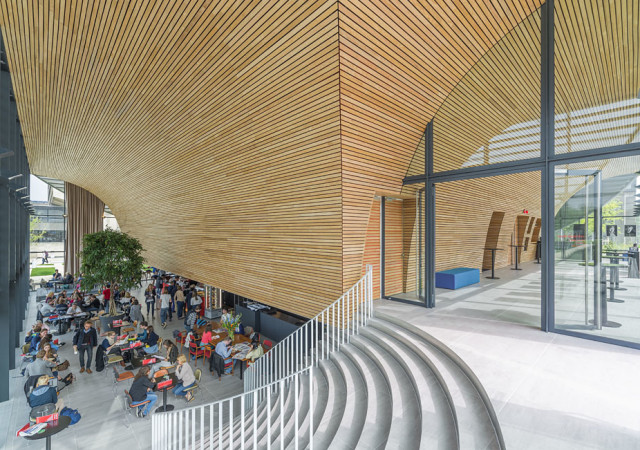
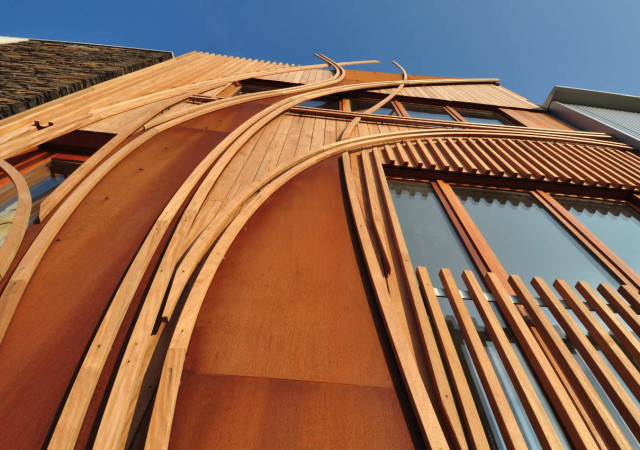
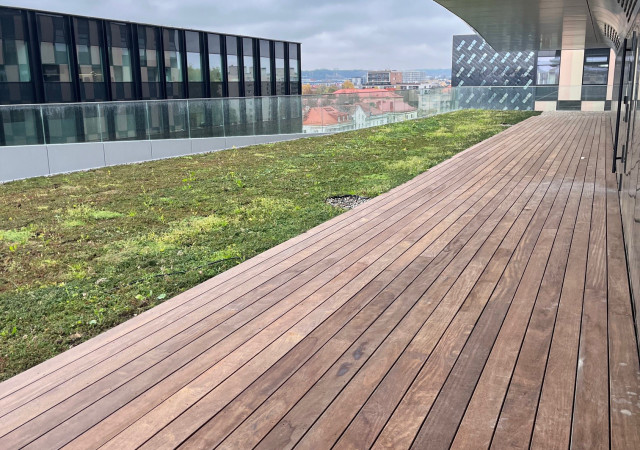
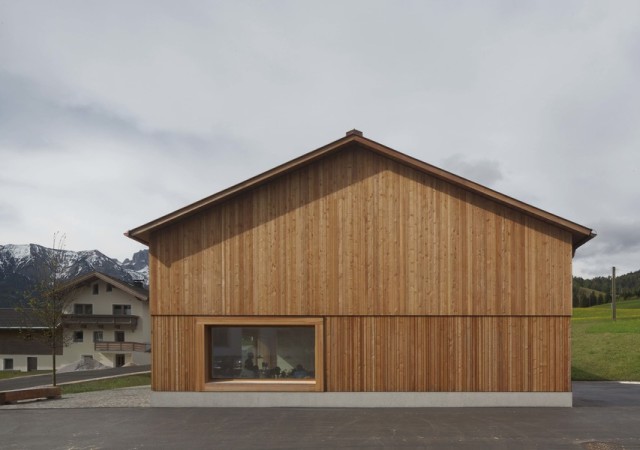
Wood is light, easy to work with and stores carbon for as long as the building stands. That makes timber facades an attractive choice for new builds as well as for renovation projects, where an insulated timber skin can upgrade an existing wall. The natural look of wood also softens large volumes and helps buildings blend into their surroundings. With the right species, a facade can be left untreated to weather to a silver-grey patina or finished to keep its original colour.

How do you choose the right cladding timber?
The species determines how a facade looks, how it ages and how much maintenance it needs. When you select cladding timber, the durability class, dimensional stability and weathering behaviour matter as much as the colour on day one. The species below are among the most frequently used:
Larch is dense and resinous, which makes it suitable for untreated facades.
Scandinavian redwood has a fine grain and is often used after impregnation.
Thermally modified timber offers improved durability and stability without chemicals.
Douglas fir combines a warm tone with good strength and is used in contemporary facades.
Durable hardwoods are chosen when you need maximum lifespan or a distinctive colour.
Which species qualifies as the best wood for outdoor use ultimately depends on the exposure, the desired look and the maintenance you are willing to accept.
Profiles and design options
The profile and orientation of the boards have as much impact on timber facades as the species. Shiplap and tongue-and-groove profiles create a closed surface, while open-joint cladding and slats add depth and shadow lines. Vertical boards emphasise height and drain water quickly, whereas horizontal boards make a building appear longer and lower. When the facade continues into interior walls or ceilings, architectural timber in the same species keeps the look consistent from outside to inside.

Details that make timber facades last
Good detailing protects the cladding timber long after installation. A ventilated cavity behind the boards allows moisture to dry out, and enough clearance at the base keeps the timber away from splashing water. Stainless steel fixings prevent black staining, which is especially important with tannin-rich species such as oak. Sealing the end grain and installing the boards at a moisture content close to outdoor conditions reduces cracking and movement. Fire safety requirements differ per country and building type, so check them early, as some projects call for a fire-retardant treatment.
CE-marked and certified timber for facades
Facade cladding is a construction product, so it must come with the right documentation. Our cladding profiles are CE-marked under EN 14915, which simplifies approval and gives you a clear declaration of performance for the building file. Because we supply certified timber under FSC®, PEFC, OLB and Preferred by Nature, you can also document the responsible origin of your timber facades for tenders and sustainability assessments. As a timber wholesaler, we keep the main species in stock, cut them to length and deliver them across Europe within one to three days.
Plan your facade with our sales team
Share the preferred look and the surface area of your facade. Our timber specialists will suggest suitable species, profiles and grades. You receive a clear proposal with availability, processing options and delivery time. Discuss your project with us before you finalise the specification.
