
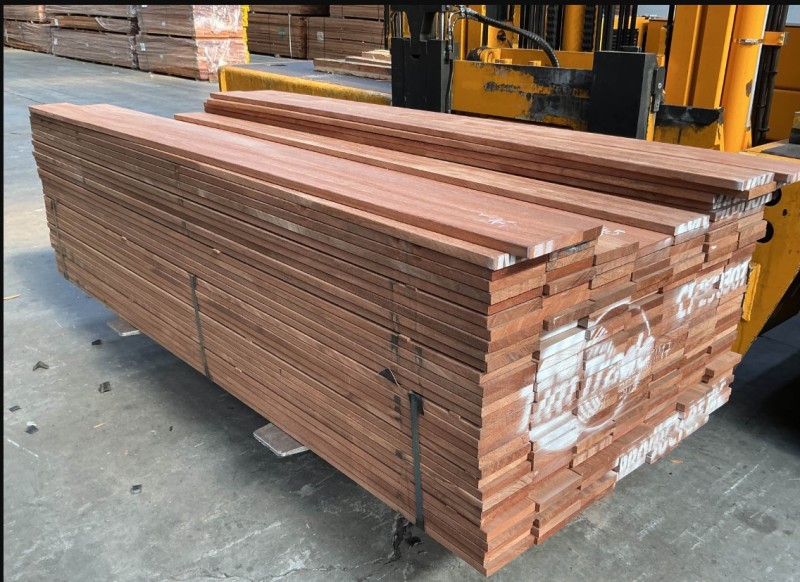
Hardwood decking timber
A terrace, pool deck or boardwalk is exposed to sun, rain and constant footfall every day of the year. Decking boards that crack, splinter or rot after a few seasons lead to call-backs and unhappy clients, which no installer can afford. Hardwood decking timber solves that problem with naturally durable species that keep their strength and appearance for decades. Vandecasteele Houtimport supplies landscapers and merchants with decking boards from tropical and European hardwoods.
Equip your next terrace with lasting hardwood

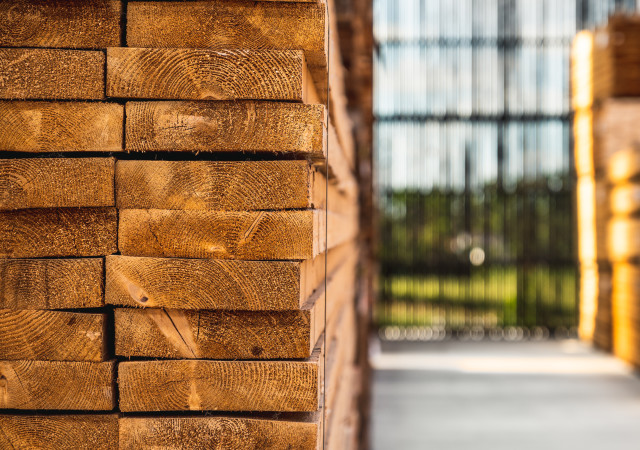
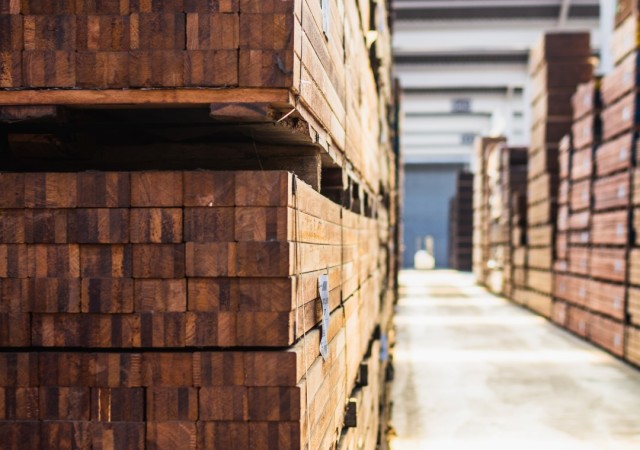
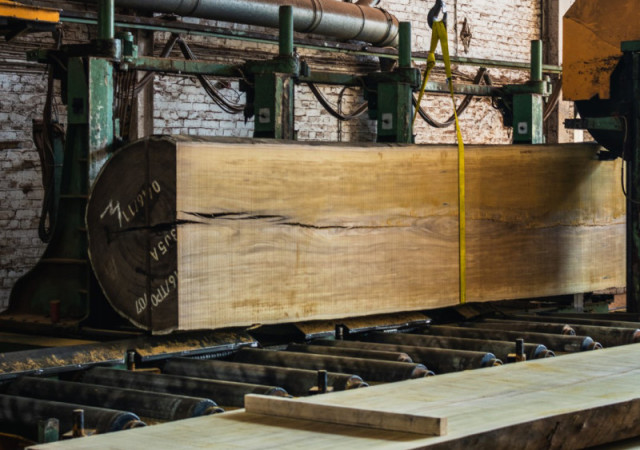
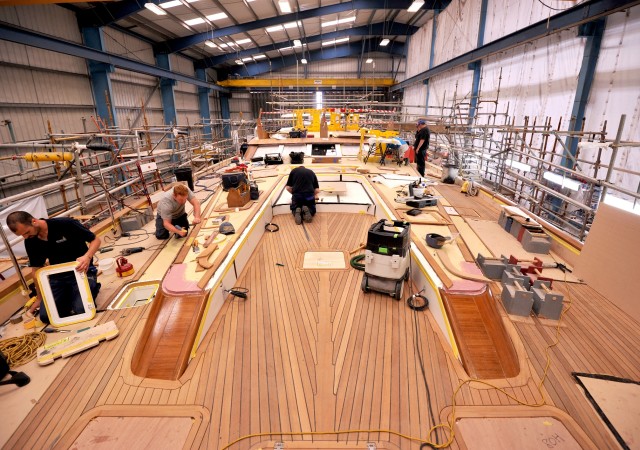
Hardwood or softwood decking
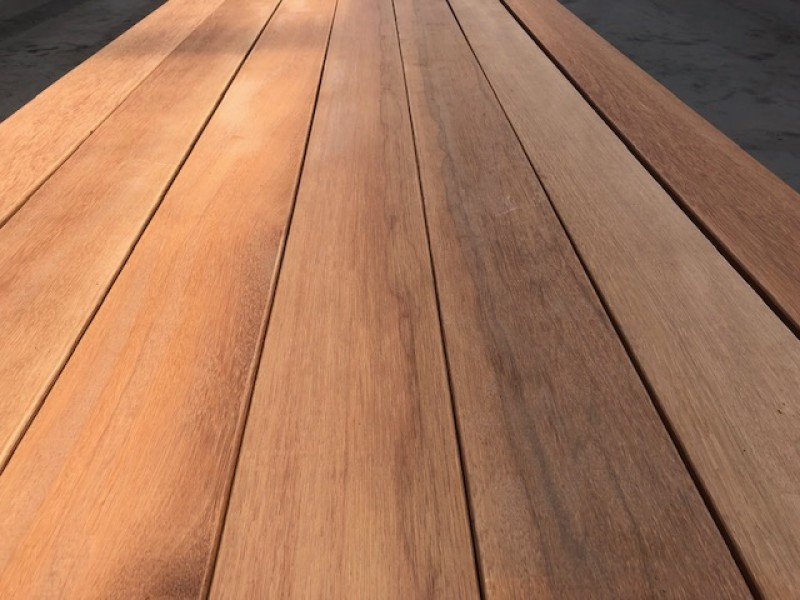
Treated softwood is cheaper to buy, but it depends on chemical preservation and needs regular maintenance to stay in good condition. Hardwood decking timber relies on its own natural durability instead, with many species rated class 1 or 2 under EN 350. Those species often last well over 25 years outdoors, even in damp gardens or around pools. The higher purchase price is therefore usually recovered through a longer lifespan and fewer repairs. Choosing the most suitable wood for outdoor use starts with the load, the climate and the look your client has in mind.
Popular species for hardwood decking
Each species of hardwood decking timber has its own balance between durability, colour, hardness and price.
Ipe wood is extremely hard and dense and is often chosen for public boardwalks.
Cumaru offers similar durability with a warm, golden-brown tone.
Bangkirai, also known as yellow balau, is a widely used all-round decking species.
Red balau has a reddish tone and good stability, which makes it suitable for terraces.
Massaranduba is very heavy and strong, with a deep red-brown colour for bold designs.
Profiles, dimensions and drying
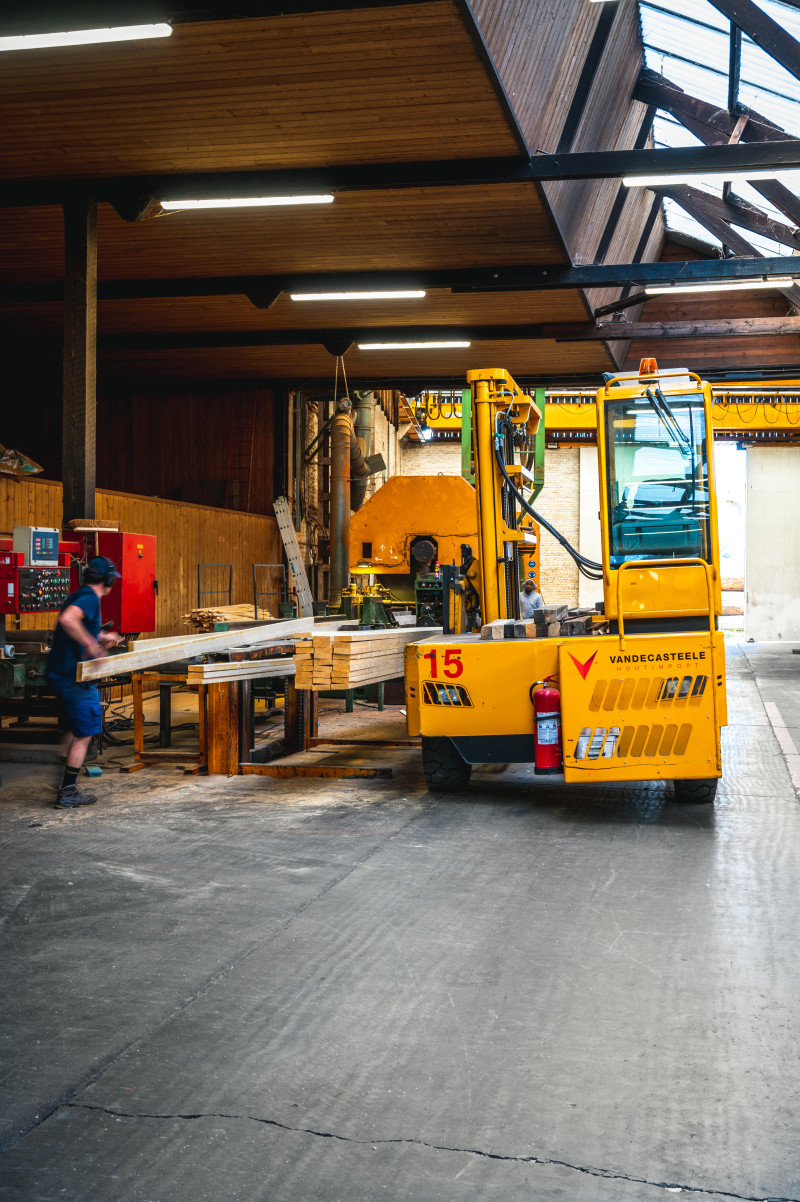
Most hardwood decking timber is supplied in thicknesses of 21 to 28 mm and widths of 90 to 145 mm, with longer lengths available for larger projects. Boards can be smooth on both sides, grooved or reeded for extra grip, or reversible so the installer can choose the face. Kiln-dried decking moves less after installation, while air-dried boards are more economical for large surfaces where minor movement is acceptable. For terraces where a refined, teak-like appearance matters more than maximum hardness, afrormosia wood is a durable choice with a fine texture.
Installation that lasts
Even the most durable hardwood decking timber performs best when the deck is built correctly. The joists should be of a durable species or properly treated, with enough ventilation underneath to let moisture escape. Leaving gaps of around 5 to 8 mm between boards allows for movement and drainage, and pre-drilling every screw hole prevents splitting in dense hardwood. Stainless steel screws avoid black staining from tannins, and sealing freshly cut ends reduces end checks. This is advice our timber company gives with every decking order you place.
Certified and legally sourced decking
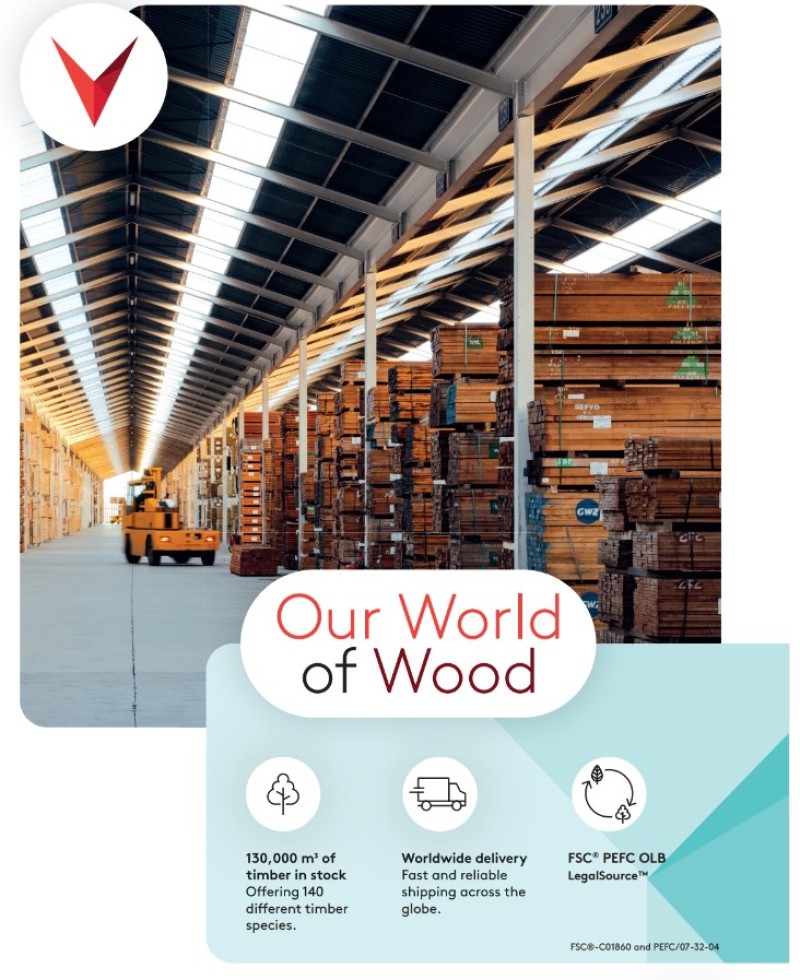
Tropical decking species come from forests where responsible management makes a real difference. Our certified timber range includes hardwood decking timber with FSC®, PEFC, OLB or Preferred by Nature claims, which helps you meet public tenders and sustainability requirements. Every shipment is also covered by due diligence under the EU Timber Regulation and the EUDR, and species such as ipe and cumaru arrive with the required CITES documentation.

Compare decking species with our specialists
Describe the surface, the use and the look you are aiming for, and we will recommend the species, profile and dimensions that fit. You also receive current availability and the documentation. As a timber wholesaler for the trade, we can also supply the joists and beams for the substructure in the same delivery. Ask our decking specialists for a proposal that matches your project.
