
Marine teak
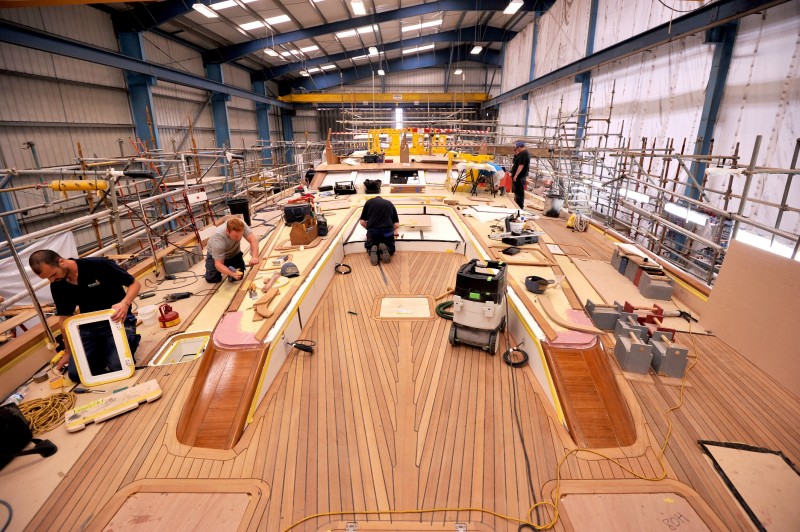
Few materials define a yacht as clearly as a golden teak deck that stays cool underfoot and offers grip in wet conditions. Yet finding teak of that quality has become a real challenge for shipyards and boatbuilders. Supply from traditional sources has dried up, and buying the wrong batch can mean knotty boards. Marine teak from Vandecasteele Houtimport gives you clear, straight-grained material from legal sources, so you can build decks that meet both the owner's expectations and European law.
Plan your next teak deck with us

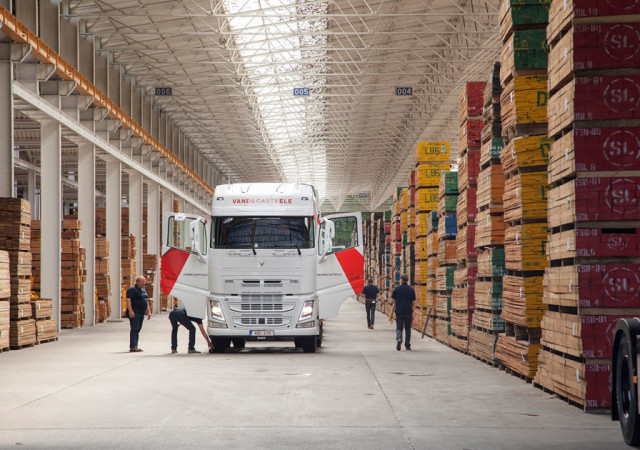
What makes teak marine-grade?
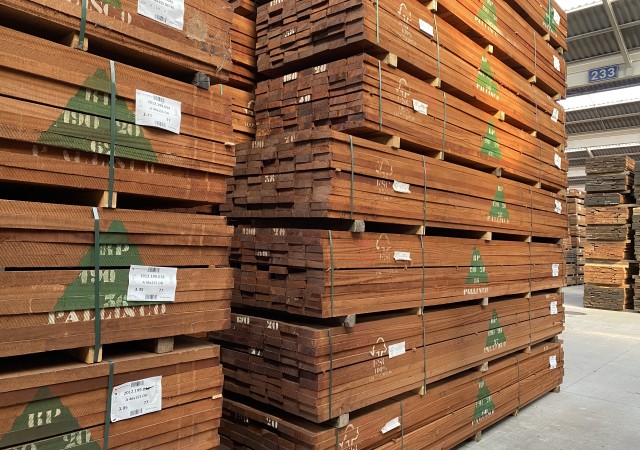
Teak, or Tectona grandis, contains natural oils and silica that make it highly resistant to water, rot and wear. The term marine teak refers to the selection rather than to a separate species. Marine teak is cut and graded for the demanding conditions on board, based on a few key criteria.
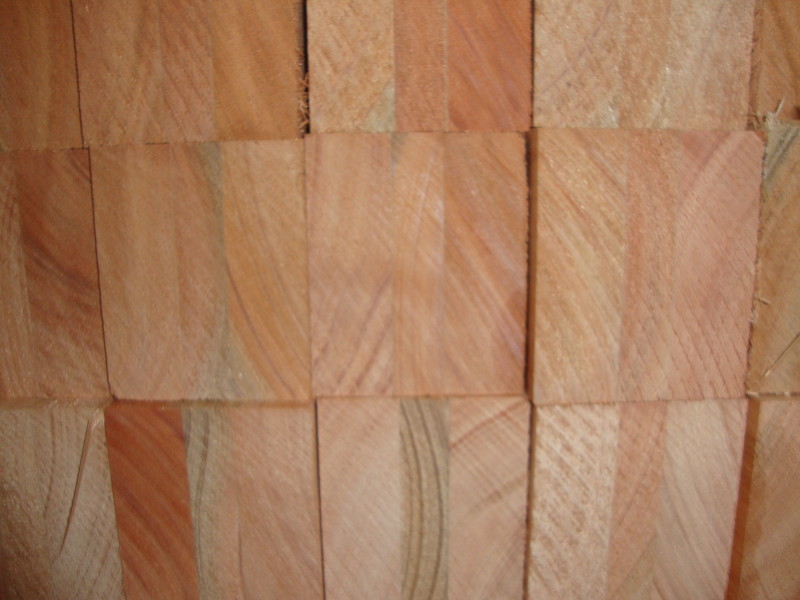
The boards are quarter-sawn, so the grain wears evenly and the deck stays flat as it ages.
The grain is straight and tight, with no or very few knots, cracks or sapwood.
The colour is even across the batch, which matters when rows of planks are laid side by side.
The moisture content is controlled, so the planks stay stable once caulked and fixed.
Why do shipyards still choose teak?
Teak shrinks and swells very little, which keeps seams tight and caulking intact over many seasons. Its natural oils repel water, and the surface turns slightly rough as it weathers, giving the non-slip quality that crews rely on. The warm colour mellows to a silver patina or can be kept honey-brown with regular care. With careful cleaning and only light sanding, a teak deck can last for decades. As a timber specialist, we select our marine teak on exactly these qualities.
Where does marine teak come from today?
For a long time, the best yacht decks were made from old-growth teak from Myanmar. Since 2021, EU sanctions against the Myanma Timber Enterprise have closed that route. Today, marine-grade teak comes from well-managed plantations, mainly in Latin America, Africa and Asia. Plantation trees are younger, so careful selection is needed to find boards with the tight grain and lengths that deck builders expect. Through our own timber import, we work with producers who meet those standards and provide full documentation under the EU Timber Regulation and the EUDR that applies from 30 December 2026.
Beyond the deck
Although yacht decks remain the best-known application, teak of this quality is also used for cockpit soles, handrails, hatches and interior joinery on board. On shore, it is a favourite for luxury garden furniture, bathroom fittings and exterior joinery where appearance and durability go hand in hand. For terraces and pool surrounds with heavy use, a denser species such as ipe wood can be the more practical choice. On land, teak also holds its own among other hardwood decking timber.
Alternatives with a similar look
When budget or availability makes teak difficult, other durable hardwoods can offer a comparable appearance. Afrormosia wood from Central Africa is often called the teak of Africa because of its similar colour and fine texture, and it performs well in exterior joinery. Species such as iroko and afzelia have also been tested as deck alternatives. Our team is happy to discuss which option fits your project when marine teak is not available in the dimensions you need.
Send us your deck plans
Let us know the length of the vessel, the deck layout and the plank dimensions you have in mind. As a timber wholesaler, we will check which marine teak is available, suggest the most suitable grade and confirm the lead time. Share your plan and we will get back to you with a tailored proposal.
